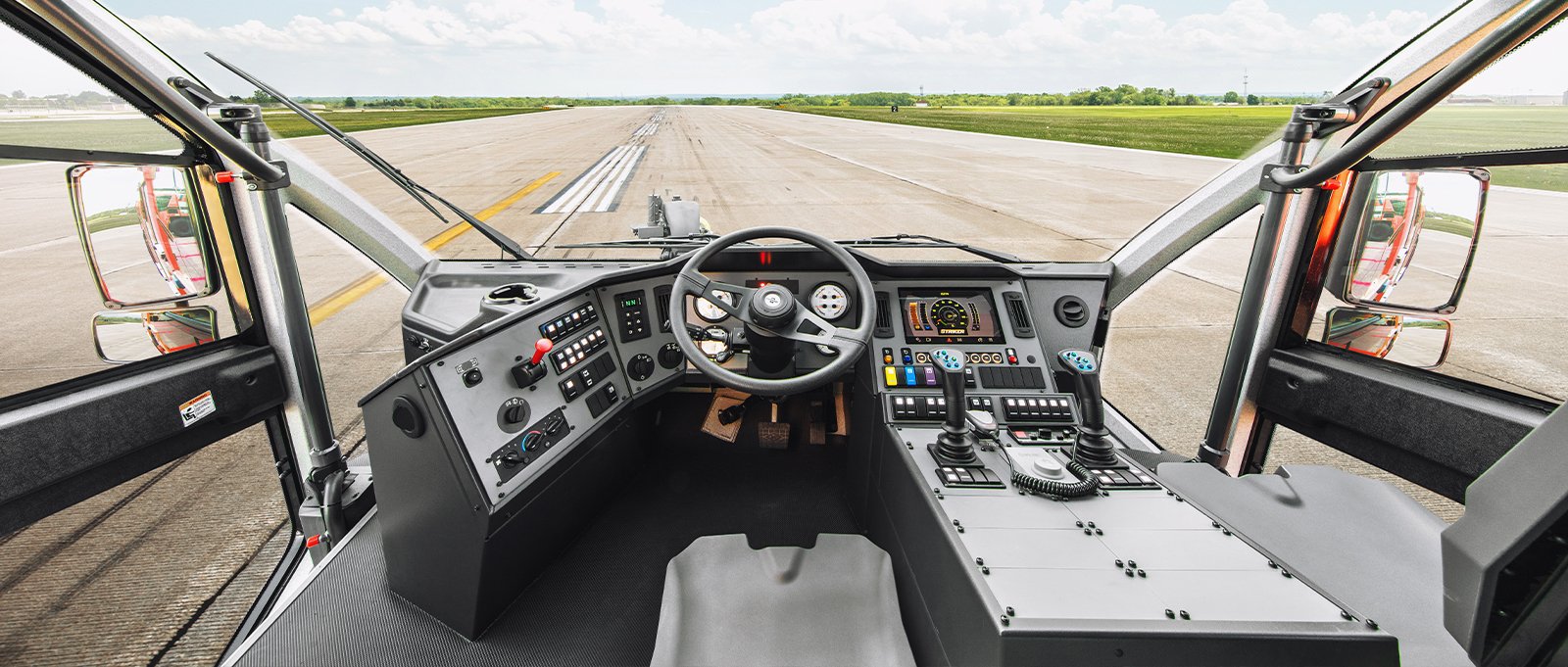
When an aircraft emergency occurs, an Aircraft Rescue and Firefighting (ARFF) vehicle has a very different job to do than a traditional municipal fire truck. In many cases, a single ARFF operator is responsible for driving to the scene while also managing the vehicle’s firefighting systems from inside the cab.
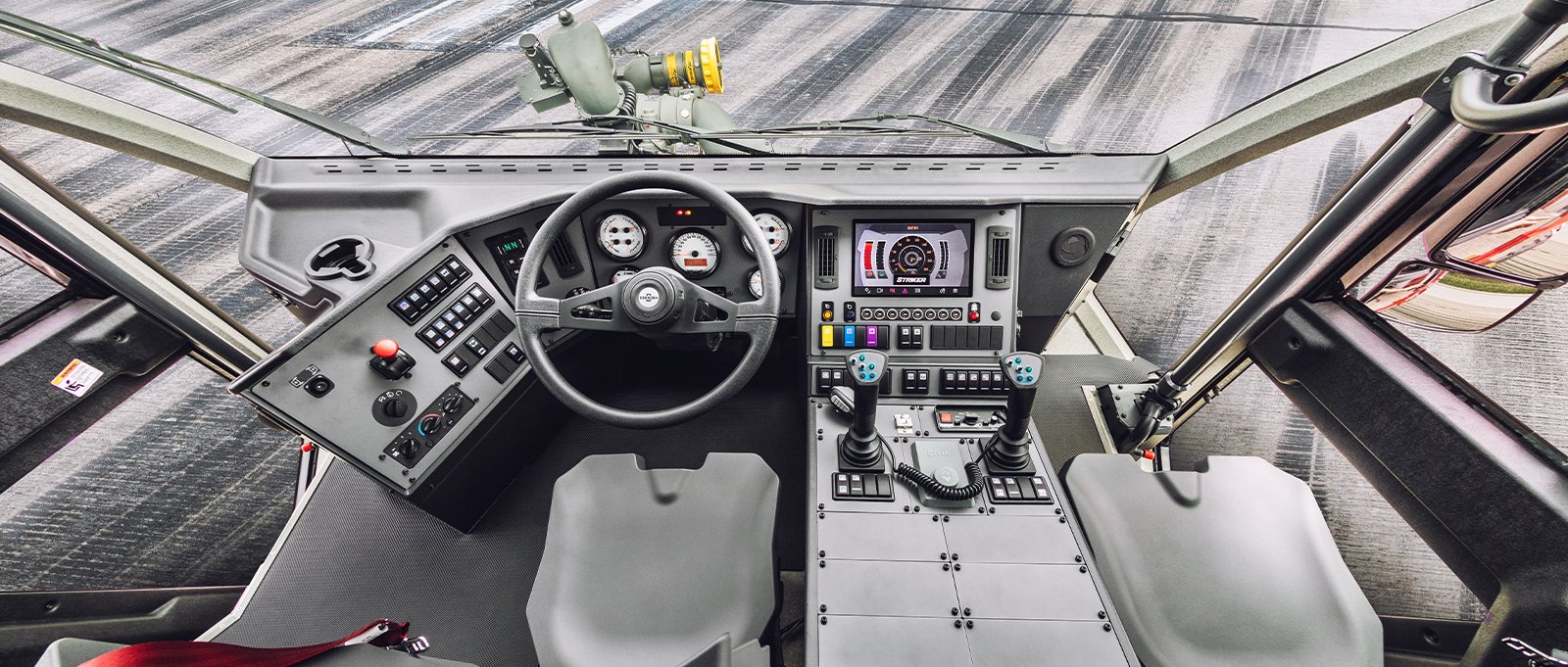
For the Oshkosh® Striker® ARFF vehicle, that makes the cab more than a place to sit. Every element, from center steering and expansive glass to control placement and displays, is designed around the firefighter, putting critical information and firefighting controls within sight and reach.
By combining firefighter feedback and real-world operator experience with engineering expertise from across Oshkosh Corporation, the Oshkosh Airport Products team continually evaluates and enhances the Striker ARFF vehicle cab. Keep reading for a closer look at the thought, research and engineering behind its design.
What Makes an ARFF Vehicle Cab Different?
A municipal fire truck and an ARFF vehicle may both be built to respond to emergencies, but the responsibilities of the person behind the wheel can be very different.
On a traditional municipal fire truck, the driver’s primary responsibility is getting the apparatus and crew to the scene. Once there, firefighters can exit the vehicle, pull handlines and begin responding to the incident.
During an aircraft rescue and firefighting response, the Striker® ARFF vehicle is designed so a single operator can drive to the scene and begin deploying firefighting agents without leaving the cab. This ability to manage critical response functions from within the cab plays a central role in its design, with an emphasis on operator visibility, accessibility and ease of use.
“The design of the cab allows for a single-operator response from within the cab,” said Jon Zeamer, Director of Engineering at Oshkosh Airport Products. “That’s why everything from what the operator can see to where each control is placed is carefully considered as part of the cab’s overall ergonomic design.”
Depending on the airport’s response needs, the Striker® ARFF vehicle cab can also support a two-person operation, allowing one firefighter to focus on driving while the second manages response tasks, such as operating the vehicle’s firefighting systems. The cab can also accommodate a crew of up to five firefighters when the mission requires additional personnel.
ARFF Vehicle Cab Visibility Starts with the Windshield
When an ARFF operator is positioning a vehicle to fight an aircraft fire, having as much visibility as possible is critical.
Oshkosh engineers have conducted vision studies to evaluate an operator’s field of view during a response, including the sight lines needed to see the top of an aircraft while operating the vehicle’s turrets. This research helps engineers determine where visibility matters most and influences the overall windshield and cab design.
That is why the Striker® ARFF vehicle cab features 98 square feet (9.1 m²) of combined glass, providing a 254-degree horizontal viewing range and forward visibility of 8.8 feet (2.7 m).
“The windshield is always the first thing firefighters notice and comment on when they sit in the Striker ARFF cab,” said Zeamer. “It’s impressive just how much you can see from the driver’s seat, and that level of visibility is very intentional.”
Explore five key features of the Striker® ARFF vehicle and how they support aircraft rescue and firefighting operations.
Center Steering Designed for Single-Operator ARFF Response
 The windshield is only one part of maximizing visibility from inside the Striker® ARFF vehicle cab.
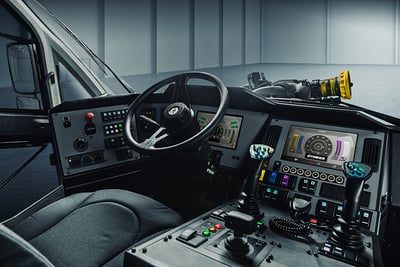
Unlike the traditional left-hand steering position found in many municipal fire trucks, the Striker ARFF places the driver in the center of the cab. From this position, the operator has a more balanced field of view from side to side, as well as up, down, forward and behind the vehicle.
The center-steering position also supports the unique responsibilities of a single ARFF operator. Because the driver may need to operate the vehicle’s firefighting systems while responding to a fire, the curved dashboard wraps around the operator, placing required controls, joysticks and display screens within sight and reach from the driver’s seat.
“An ARFF operator has a lot happening at once,” said Zeamer. “They’re driving the vehicle, assessing the scene and preparing to operate firefighting systems, so you want them to be sitting in a position where they can access everything without taking their attention away from what’s happening outside the cab.”
For two-person operations, the cab also allows responsibilities to be shared, with one firefighter focused on driving while the second manages firefighting systems and other response tasks.
Intuitive Controls for Rapid ARFF Response
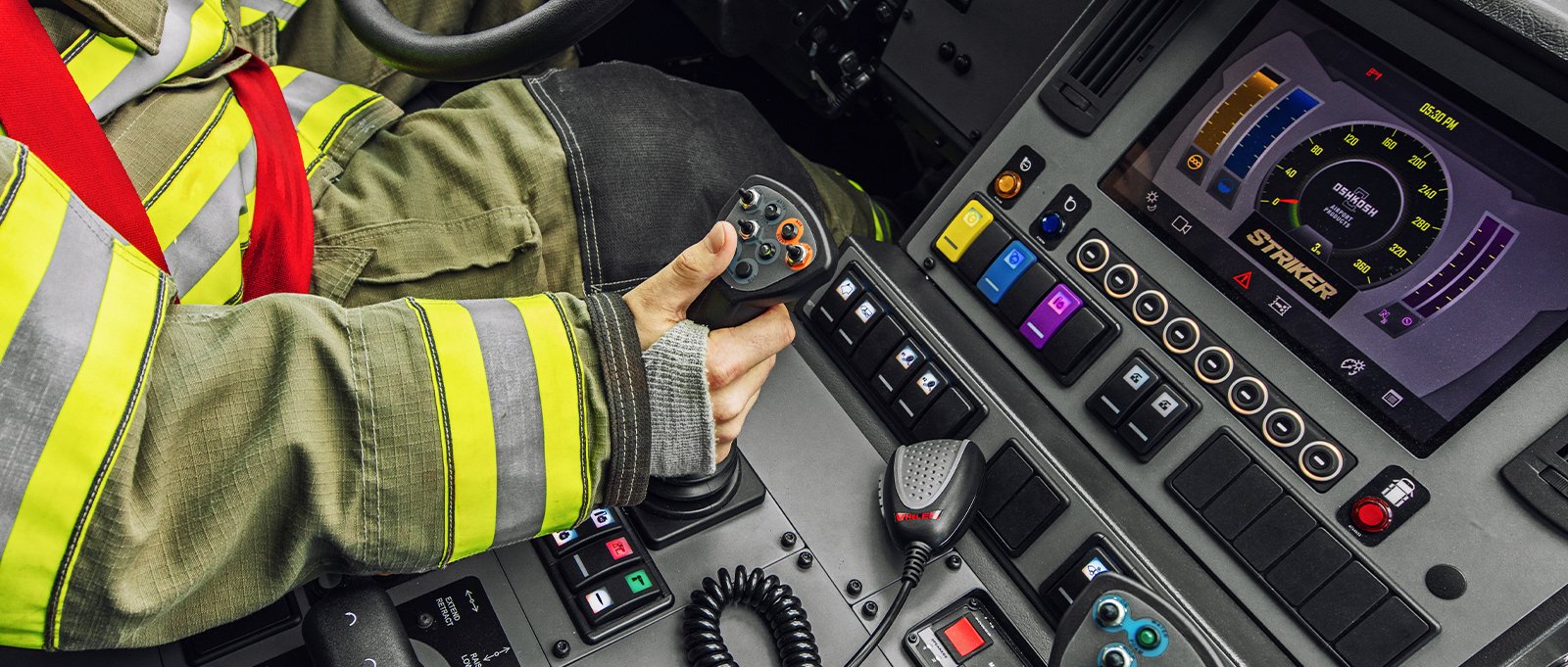
The controls in the ARFF vehicle cab are also designed to help an ARFF operator quickly identify and access the systems they need during a response.
Required controls for single-operator use are positioned within reach of the driver’s seat, while color coding helps differentiate controls associated with water, foam and dry chemical agents. These design decisions help create a more intuitive cab environment where information and controls are organized around how an ARFF operator uses the vehicle.
ARFF Vehicle Display Designed for Situational Awareness
With a single operator potentially responsible for driving and operating firefighting systems, finding the information they need when they need it shouldn’t become another task to manage.
This operator-focused approach is reflected in the Striker® ARFF vehicle's display. The ARFF vehicle cab features a 12-inch (30.5-cm) main display powered by the Command Zone™ electrical system, where operators can view firefighting information and access available camera views.
More importantly, relevant information can automatically appear based on what the vehicle is doing. Shift into reverse, for example, and the backup camera appears. Begin flowing water, and the firefighting display provides information about the system’s operation. This helps keep the information most relevant to the operator’s current task in front of them without requiring them to manually navigate between screens.
“There is a lot of information on our vehicle, so we use industry best practices, recommended standards and operator use cases to make sure we’re displaying the correct information where and when the operator expects to see it,” said Zeamer. “The last thing they need to be worried about when fighting an aircraft fire is switching displays.”
Available camera options provide additional views around the Striker ARFF vehicle to support situational awareness from inside the cab, including:
- Backup camera - Provides a rear view when the vehicle is placed in reverse.
- Infrared cameras - Help operators identify heat sources and hot spots, providing additional visibility when assessing an aircraft fire.
- Forward-looking scene cameras - Provide an additional view of the scene ahead of the vehicle.
- 360-degree camera - Provides a bird’s-eye view around the vehicle for a broader perspective of its surroundings.
Ready to learn more about the Striker® ARFF vehicle? Find an Oshkosh Airport Products dealer near you.
ARFF Cab Features Designed to Reduce Carcinogen Exposure
The long-term health and safety of ARFF crews is also an important consideration in the Striker® ARFF vehicle cab design. That’s why the vehicle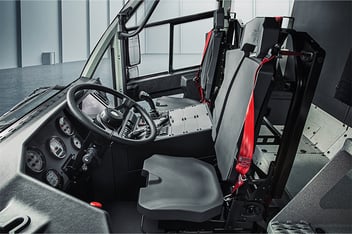
is available with the C.A.R.E. (Carcinogen Awareness & Reduction to Exposure) package, designed to help reduce firefighters’ exposure to contaminants that can be carried back into the cab after an incident.
The C.A.R.E. package includes washable seats and interior materials that make cab surfaces easier to clean and decontaminate after a response. It’s another example of how the Striker ARFF cab is designed around the firefighter experience before, during and after an aircraft emergency response.
Always Advancing the Striker ARFF Vehicle Cab
At Oshkosh Airport Products, our engineers are always looking for ways to improve the Striker® ARFF vehicle cab and the overall operator experience. One of the best ways to do that is by going directly to the firefighters who use these vehicles.
Oshkosh engineers work alongside ARFF firefighters and operators to see firsthand how they interact with the vehicle. In some cases, that means getting into the cab with a firefighter and observing how they drive, position the vehicle, use the controls and deploy firefighting agents during training scenarios.
“Firsthand experience with the firefighters using our vehicles helps us identify ergonomic opportunities or other challenges that could decrease the efficiency of an operator during an aircraft rescue and firefighting response,” said Zeamer. “That type of feedback is invaluable to our engineering team.”
Firefighter input also comes from a variety of sources, including:
- ARFF industry working groups where Oshkosh can connect directly with firefighters and fire chiefs.
- Training and service teams that regularly work with departments operating Oshkosh ARFF vehicles.
- The Oshkosh Dealer Network and its ongoing conversations with customers in the field.
- Direct operator observation and feedback that allows engineers to see how firefighters use the vehicle during training and response scenarios.
Tapping Into the Oshkosh Corporation Network
Oshkosh Airport Products engineers can also tap into the knowledge and experience of engineering teams across Oshkosh Corporation, sharing lessons learned and best practices related to cab design, ergonomics, visibility and the overall operator experience.
“One of the big advantages we have at Oshkosh Airport Products is the greater Oshkosh Corporation network,” said Zeamer. “We can learn from teams designing cabs for everything from McNeilus refuse and recycling vehicles to Pierce municipal fire trucks, take best practices from those different industries, and apply those lessons to the unique needs of aircraft firefighting.”
Together, firefighter feedback and engineering expertise from across Oshkosh Corporation help the Oshkosh Airport Products team continually evaluate how the Striker® ARFF cab performs and identify opportunities to make the operator experience even better.
A Purpose-Built ARFF Vehicle Cab
Every element of the Striker® ARFF vehicle cab starts with understanding the unique responsibilities of the ARFF operator. From visibility and center steering to intuitive controls and real-time vehicle information, the cab is engineered around how firefighters need to operate during an aircraft emergency response.
And the engineering doesn’t stop once a vehicle leaves the factory. By listening to firefighters, observing how Striker ARFF vehicles perform in the field and tapping into expertise from across Oshkosh Corporation, Oshkosh Airport Products continues to learn, evaluate and look for ways to advance the ARFF operator experience.
It’s all part of a larger commitment to engineering purpose-built ARFF vehicles and systems for the firefighters and airports that depend on them.
Want to see what else goes into the Oshkosh® Striker® ARFF vehicle? Explore the Striker ARFF to learn more about its performance, firefighting systems and available features.